 Ismaili.NET - Heritage F.I.E.L.D.
¤ Books
54. Jaffer Rahimtullah (Rahimtoola) - page 222
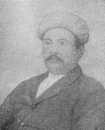
Jaffer Rahimtulla was the younger brother of Sir Ibrahim Rahimtullah (1862-1942). He was born in 1870 and after the death of his father, his brother Ibrahim Rahimtullah gave him adequate education. After his matriculation in 1888, he joined the university and passed B.A. (Hon.) in Philosophy and Logic. He then proceeded to London in 1894 for high education in laws and eventually became the barrister. He studied in London the laws of inheritance of the Ismailis for about 30 months, and intended to compile a book for it.
- Read more
- 11082 reads
33. Eboo Pirbhai, Dewan - page 127
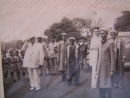
Dewan Sir Eboo Pirbhai, the first Chairman of the Leaders' International Forum, was born at Bombay on May 27, 1905. His father, Pirbhai Gangji belonged to a noble family.
He came in Nairobi in 1910 with his family, where he took his early education at the Duke of Gloucester School. Without much formal education, he became a taxi owner-driver in 1926.
- Read more
- 17902 reads
55. Jafferali Ali Megji. Count - page 223
Jafferali Ali Megji was born on December 16, 1909 in Dar-es-Salaam. Soon after his education, he joined the services of the community in different fields till he became the Honorary Secretary of the Council in 1937 and served for nine years with zeal and enthusiasm. He also established Corporations in Tanganyika.
- Read more
- 9438 reads
34. Fadhu Piru Khalikdina, Varas - page 133
Nur Muhammad was a devout Ismaili, who lived in Jimpir, Sind. His son Khalikdina however took up his abode at Jerruk. Khalikdina had three sons, Piru, Yonus and Juma. The elder son Piru, also called Pir Muhammad, was the Mukhi in Jerruk. Mukhi Piru had four sons, Fadhu, Aziz Ali, Amir Ali and Ghulam Hyder. The most prominent among them was Fadhu.
- Read more
- 12538 reads
56. Jan Muhammad Hansraj, Varas - page 224
Jan Muhammad Hansraj was born in 1838 in Kutchh. Not much is known about his early life. He however made a trip of Zanzibar in 1852 and ventured in the business field. He started first a retail store with his brother, Kanji at Bagomoyo, and eventually expanded into wholesale trade. He is still remembered as industrious and generous, who helped the arriving Ismailis in Africa.
Jan Muhammad Hansraj owned at least five stone houses with plots in Bagomoyo, and was also the deputy of Sir Tharia Topan (1823-1891) in the town since 1860.
- Read more
- 9777 reads
35. Fidai Khorasani - page 138
Muhammad bin Zain al-Abidin bin Karbalai Daud Khorasani, was also known as Fidai Khorasani and Haji Akhund in Iran. He was born in 1850 in Dizbad, a village located in the mountains between Mashhad and Nishapur. He traced his descent from Khaki Khorasani (d. 1646), the famous Ismaili poet. Fidai Khorasani took his formal education in Dizbad and studied in Bakiriya Madrasa in Mashhad. He was knowledgeable in religion since childhood and explored rare historical documents on Ismailism.
- Read more
- 16932 reads
57. Jivabhai Bhanji, Wazir - page 225
Jivabhai Bhanji traced his lineage from a certain Bhagat Virabhai Devasi, who lived in the beginning of 15th century in Kathiawar. Paraptani is said to be his only son, and his son was Parpiya. Karim was the younger son of Parpiya, and the son of the former was Bhima, who also lived for some time in Mundra, Kutchh with his son Hamid. The next generation followed by Hamid was Bhanji, who passed a hard life in Kathiawar in poverty with his two sons, Jiva and Kassim.
- Read more
- 13346 reads
36. Ghulam Ali Allana, Huzur Varas - page 140
Ghulam Ali Allana traced his descent from a certain Haji, and whose son, Vali was a small merchant in Lahari Bandar, Sind. When the port of Lahari Bandar dried up, Vali came in Jerruk, where he lived with his son Saleh. The son of Saleh was Aloo, whose business expanded as far as Bhuj, Kutchh. Natho, the son of Aloo lived for some time in Bhuj, Kutchh and then settled down in Mulla Katiar, Sind. Natho's son was Khalfan, who migrated towards Karachi with his wife, called Lakhanni. Khalfan was the care-taker (jamatbhai) in the Kharadhar Jamatkhana.
- Read more
- 20787 reads
58. Juma Bhagat Ismail, Missionary - page 230
Juma Ismail or Juma Jan Muhammad traced his descent from a certain Ramal, who lived in the village of Buara in district Thatta, Sind and died in Jerruk. His son mostly dwelt in Kutchh and returned to Bhambor in Sind. The Kalhora rulers of Sind were his deadly enemies, therefore, the son of Ramal came in Karachi, assuming the name, Bambo. His son was Motiyo, who lived in district Badin. His son Allana, whose son Vali resided in Tando Bagho, Sind and looked after the shrine of Pir Tajuddin. Vali married to Jusafa and had two sons, Ismail and Ramzan.
- Read more
- 14146 reads
37. Ghulam Ali Shah, Missionary - page 144
Ghulam Ali Shah was the son of Sayed Muhammad Shah, a native of Qaimpur, about 10 miles from Khairpur in Bhawalpur State, founded by Qaim Khan Arabni in 1747. Sayed Muhammad Shah was a famous landowner. He was a Twelver and well rooted in Islamic studies, and he had over 6000 followers in his village.
- Read more
- 27735 reads
59. Juma Jan Muhammad - page 223
Juma Jan Muhammad was born possibly in 1850 in Bombay, where he got his early education. He was a leading leather merchant in Bombay and a commission agent. He was also an owner of a tannery at Dharavi. He extended his business as far as Europe and Burma.
- Read more
- 12821 reads
38. Ghulam Hussain Mohammad Ali Dharas, Wazir - page 149
Devji, the son of Lalji was a native of Junagadh, India. He was an eminent wool merchant, having immense devotion in social services. According to the available information, Devji is said to have joined the Ismaili caravan in Bhuj, Kutchh headed by a certain Dharamsi Punjuani which was bound for Iran for the didar of Imam Shah Khalilullah (1792-1817) in Yazd at the beginning of 1817. They started from the port of Mandavi, Kutchh and boarded for Muscat and landed at Port Abbas, and reached Yazd on camels. Yazd is situated between Isfahan and Kirman on the route leading to Baluchistan.
- Read more
- 23459 reads
61. Kara Ruda, Missionary - page 240
Kara Ruda came from the village of Shishang in Saurashtra, India, but there are also reports that show Kara Ruda's birthplace to be in Mengani, Virpur or Lodika in 1881. He however spent many years in Rajkot, where acquired his education.
His name was Kader Ali, and he became known as Karabhai. When the people found him compelling in religious beliefs, they called him Kara Ruda (Kara, the true), making him known as Kara Ruda, or Bhagat Karabhai.
- Read more
- 15737 reads
39. Ghulam Hussain Mohammad Jindani, Dewan - page 160
Naser was from Jamnagar, Kutchh and he came from a noble family. He migrated towards Zanzibar in 1851 to find a better life for his family. He had only a son, called Mohammad, who was born in Zanzibar in 1864. Mohammad Naser served the jamat devotedly in different fields. He was also noted for his generosity. When the first Ismaili Council established in 1905 at Nairobi with Varas Mohammad Rehmatullah Hemani as its President, Mohammad Naser was also appointed as one of its founder members (1905-1914).
- Read more
- 21722 reads
40. Ghulam Hussain S. Thavar, Wazir - page 166
Thavar Pir Muhammad hailed from Dhoraji. It is said that he left Dhoraji in 1890 with his sons, Shakur Thavar and Hashim Thavar and arrived in Deccan, Hyderabad. He again moved towards Bijapur, where he opened his small grocery shop. His sons were traders of cutlery items and bones. Soon afterwards, Thavar Pir Muhammad ventured into the business of leather. His elder son, Shakur who was born in 1880 had established the Sholapur Tenneries at very young age in Sholapur and became a pioneer merchant of leather. Shakur Thavar died on June 4, 1952 at the age of 72 years.
- Read more
- 14474 reads
41. Hamir Lakha, Missionary - page 168
Lakhpat was the oldest port of Kutchh, situated near Indus river. It depopulated from 15000 to 2500 in 1847 during a famine and became absolutely desolated. Hamir Lakha's grandfather migrated from the depopulated region of Lakhpat and came in Sind, where he rendered valuable services in different villages. It is related that Bibi Mariam (1744-1832), the mother of Imam Hasan Ali Shah visited India with Mirza Abul Kassim in 1829 to resolve the internal strifes of the community in Bombay. She arrived in Karachi via Muscat, and reached Lakhpat after visiting Jerruk.
- Read more
- 13296 reads
42. Hashim Jamal, Count - page 174
Jamal Pradhan was a famous figure in Kutiana, India. His elder son, Hashim, was born in 1880, who did his early schooling in India and helped his father in his shop in his free time. He studied upto 7th class and joined the school as a teacher. In 1901, he left the school and decided to immigrate to Africa. When he bid farewell to his schoolmates, Maneklal Nanji, the headmaster said, 'How much would you give to the school if God may bless you with Rs. 10,000/-'. To this, Hashim Jamal said, 'I will donate Rs.
- Read more
- 14391 reads
43. Hashu Tharuani - page 177
The critical examination of the extant sources shows that the Ismailis resided in large number in the villages inside Iranian Baluchistan. It is related that a group of nomad Ismailis entered into the Indian Baluchistan and settled in the southern coast of Lasbela when Jam Ali Khan (d. 1766), one of the chief of the Aliani family of the Jamot tribe of Arab, established his power in Lasbela in 1742. He was succeeded by his eldest son Jam Ghulam Shah (d. 1776) and his younger brother, Jam Mir Khan I (d. 1818) became the third ruler. He was followed by Jam Ali Khan (d.
- Read more
- 18441 reads
44. Hassan Kassim Lakha, Count - page 184
The renowned Lakha family traces their descent back to their forebear, named Surji. His son was Jairaj, and whose son was Manji. The son of Manji was Lalji, who had four sons, Punja, Virji, Lakha and Kalyan. They dwelt in the village, called Berberaja, about 12 miles from Jamnagar, Kutchh.
- Read more
- 15394 reads
45. Hooda, Vali Mohammed Nanji - page 184
Hooda Vali Mohammed Nanji was the son of Nanji Amarsi, a well-known
religious man. Nanji Amarsi passed most of his lifetime in Limadi and also went
to live in Pretoria. He had taken due care of the religious and secular
education of his son, Vali Mohammed. He died at the age of 73 years on August
28, 1933. His son, Vali Mohammad Nanji Hooda, known as V.N. Hooda was born in
Bombay in 1889. Nothing is known of his early life. He was however a
well-educated and a learned scholar, teacher and editor.
V.N. Hooda’s appearance in the arena of the community service began in
- Read more
- 12421 reads