 Ismaili.NET - Heritage F.I.E.L.D.
¤ Books
62. Karim Ibrahim, Sir - page 243
Karim Ibrahim's father Ibrahim Pabani came from Mandavi, Kutchh. He was an eminent owner of the ships, sailing in Arabian and Zanzibar coasts. He had three sons - Ladha, Datoo and Karim. Ibrahim Pabani died in 1857.
- Read more
- 11481 reads
91. Saboor Chatoor, Wazir - page 360
Kanji, a certain Ismaili was an origin of Limadi, Kathiawar. His son, Visram was a prominent person. Punja, the son of Visram was a famous merchant in Limadi, and his son Amarsi had three sons, Nur Muhammad, Pirbhai, Saboor and two daughters, Mannibai and Satbai. Among them, Saboor or Saboor Chatoor was most prominent in the Ismaili world.
- Read more
- 13112 reads
63. Karim Ismail Mansawala, Varas - page 245
Varas Karim Ismail Mansawala, the first title holder of Varas among the gupti Ismailis of North Gujrat, was born in 1867 in Mansa, Gujrat and came with his family to Bombay at the age of 6 years in 1873.
He witnessed last 14 years of the Imamate of Imam Hasan Ali Shah, and blessed with the dastboshi. When Imam Hasan Ali Shah passed away, in 1881 and was buried in Hasanabad, he joined with the labourers in the construction of the mausoleum. Varas Karim Ismail Mansawala also present during the ascension of Imam Aga Ali Shah and took oath of allegiance.
- Read more
- 11468 reads
80. Muhammad Murad Ali Juma, Missionary - page 318
Missionary Muhammad Murad Ali Juma, known as Bapu, a term of respect for an elderly man; was born in Bombay in 1878. His mother expired when he was hardly a year old. His father did not marry a second time for the sake of his son.
- Read more
- 16964 reads
64. Karim Kassim, Varas - page 247
Karim Kassim was the younger brother of Varas Bandali Kassim (1875-1956). He was born in 1878 in Karachi, where he acquired his formal education from Sind Madresa-tul-Islam School upto fourth class. He held a strong command in English, Gujrati and Sindhi languages. Muhammad Ali Jinnah, the founder of Pakistan was his classmate.
- Read more
- 12186 reads
79. Muhammad Jamal Khan, Mir - page 315
Mir Ghazanfar Ali Khan (d. 1864), the ruler of Hunza State in the northern area of Pakistan, was succeeded by his son, Mir Muhammad Ghazan Khan I, whose successor Mir Safdar Ali Khan had taken refuge in Shagnan during the British invasion in 1891. The British commissioned his half-brother, Mir Muhammad Nazim Khan as the ruler of Hunza. Mir Muhammad Ghazan Khan II and then Mir Muhammad Jamal Khan followed him.
- Read more
- 20936 reads
65. Kassim Ali Hasan Ali Javeri, Chief Wazir - page 249
Sayed Imam Shah (d. 1520) is said to have launched a brisk mission in Gujrat. He converted a certain Khoja Jiva in Khambat, Gujrat. Khoja Jiva was well rooted in Ismailism and he himself converted large number of Kanabi caste of the Hindus, notably Motilal, Daya Ram Nathu, etc. The descendant of Motilal migrated to Surat during the time of Imam Nizar II (1585-1628), who deputed Sayed Abdul Nabi in India, whose tomb is in Kankara Khadi, near Surat. He was followed by the vakils, Hasan Pir (1652-1715), Sayed Ghulam Ali Shah (d. 1792), etc.,
- Read more
- 19613 reads
66. Kassim Ali Muhammad Jaffer, Missionary - page 254
Saboo, the great grandfather of Varas Kassim Ali lived in Jerruk, Sind. His grandfather, Karmali and his family known as the Sabooani family migrated to Karachi and settled in the location of Kharadhar. The father of Varas Kassim Ali was Muhammad Jaffer (1856-1946), served as a volunteer, and supplied the vegetables and fruits daily in the Honeymoon Lodge for Imam's family. In 1920, he generously contributed funds in the building of the premises of the Baitul Khiyal in Kharadhar Jamatkhana.
- Read more
- 18816 reads
67. Kassim Ali R. Paroo, Honorary Missionary - page 261
In 1852, Haji Paroo and Jaffer Paroo, two brothers emigrated from Bhuj, Kutchh and settled in Zanzibar. The son of Jaffer Paroo was Hasham Paroo, whose son was Rajab Ali. The son of Rajab Ali was Count Kassim Ali R. Paroo.
- Read more
- 15017 reads
68. Khuda Baksh Talib, Missionary - page 265
Khuda Baksh Talib's forefathers came from Talhar, Sind who migrated to Lasbela via Karachi, then Ormada and made Gwadar finally as their home. His grandfather Karami had four sons, namely Talib, Pir Baksh, Fazal and Datoo. Talib's main source of income was in the dealing of dried fish. He had five sons, Nasir, Ghulam Hussain, Fakir Mohammad, Abdul Hussain and Khuda Baksh. Khairibai, the mother of Khuda Baksh was a renowned lady missionary.
- Read more
- 15489 reads
69. Ladakbhai Haji - page 273
Ladakbhai Haji came from the Haji Bhalu family, and was born in Kera, Kutchh in 1827. He came to Bombay with his father due to a terrible famine in Kutchh at the age of 6 years in 1833. His father was a wood-cutter. In 1835, his father returned to Kutchh, where he died in the beginning of 1836.
Soon after the death of his father, Ladakbhai Haji led a destitute life. He came to Bombay at the age of nine years. He lived and worked with his maternal uncle for 12 years free of charge. In 1840, he returned to his native land and got married.
- Read more
- 12056 reads
70. Lakhpati, Abdullah Jaffer, Major - page 275
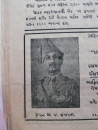
Abdullah Jaffer's grandfather belonged to Lakhpat, Kutchh and migrated to Bombay in search of livelihood. His father Jaffer was an agent of properties and estates in Bombay, and was a devoted social worker of the Khoja Panjibhai Club. He was better known as Jaffer Dalal, and Abdullah was his elder son.
- Read more
- 12376 reads
71. Laljibhai Devraj - page 281
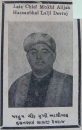
He was born in 1842 in the village of Kapaya, Kutchh. His name was Lalji and his father Devraj came to Bombay when he was hardly few months old. The loss of his mother in 1844 forced his father to hire a woman to nurse the 2 year-old child.
Mukhi Laljibhai Devraj learnt Gujrati upto grade four, and acquired little knowledge of English. He was betrothed to Lailabai in 1860. Two years after his marriage, his father Lalji died in 1862.
- Read more
- 16086 reads
72. Manji Ghulam Hussain Padamsi - page 288
He was born and raised in Vaghnagar, Kathiawar in 1883. He was a persuasive religious since childhood. His father, Ghulam Hussain Padamsi was once a famous hostage of Imam Hasan Ali Shah, who died on September 15, 1927.
- Read more
- 12472 reads
73. Master Hashim Bogha - page 290
Master Hashim Bogha was born in Porebandar, India in 1863. He was intelligent and thus eager to get educated, but his poverty fated a hitch in his life. He however continued by hook and crook. He studied till late hours at night. Sometimes he stood several hours below a street-light to study when he had not a single penny to purchase kerosene for the lamp. Despite his down-trodden condition, he had his schooling upto matriculation.
In 1881, his fortune brought him in Bombay at the age of 18 years and joined Khan Muhammad Habib School as an assistant teacher in the English section.
- Read more
- 11131 reads
74. Megji Mulji, Mukhi - page 294
He was born in Badresar, Kutchh, in 1861. His father died when he was 3 years old. Dressed in rags, he arrived in Bombay in 1878 at the age of 17 years. He started to work in a shop, where the grams were baked in the oven, thus earning two rupees per month. He was honest and a hard worker, therefore, his monthly pay was raised to five rupees.
- Read more
- 13507 reads
81. Muhammad Remu, Varas - page 320
His forefathers hailed from Lakhpat, Kutchh, and hence they migrated towards Gwadar. His father Bhagat Remu Mawji was a trader of cotton, wool, fish, rice and ghee, and also dealt the business of shark fins and fish maws with the Chinese merchants. Remu Mawji sprang from a family well known for their piety. He visited Bombay several times. He was the Kamadia of Gwadar Jamatkhana since 1892. He and Merali, the father of Alijah Datoo Meru laboured in the construction of the Jamatkhana.
- Read more
- 13882 reads
75. Moledina Megji, Varas - page 298
Varas
Moledina Megji, also known as Varas Moloo or Moloo Kamadia, was born in Mundra,
Kutchh in 1854. His forefathers were the renowned merchants, conducting the
businesses of grains, ghee and wool in the name of Vali Parpiya, and extended
their mercantile influence as far as Karachi and Jamnagar. His father ran a
business with two brothers, then severed and started his own business in the
name of Megji Vali. When he died, his son Varas Moledina continued it. His
business involved collecting wool in Kutchh. For shearing the annual wool crop,
- Read more
- 12276 reads
54. Jaffer Rahimtullah (Rahimtoola) - page 222
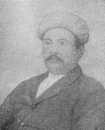
Jaffer Rahimtulla was the younger brother of Sir Ibrahim Rahimtullah (1862-1942). He was born in 1870 and after the death of his father, his brother Ibrahim Rahimtullah gave him adequate education. After his matriculation in 1888, he joined the university and passed B.A. (Hon.) in Philosophy and Logic. He then proceeded to London in 1894 for high education in laws and eventually became the barrister. He studied in London the laws of inheritance of the Ismailis for about 30 months, and intended to compile a book for it.
- Read more
- 11082 reads
33. Eboo Pirbhai, Dewan - page 127
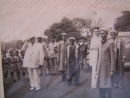
Dewan Sir Eboo Pirbhai, the first Chairman of the Leaders' International Forum, was born at Bombay on May 27, 1905. His father, Pirbhai Gangji belonged to a noble family.
He came in Nairobi in 1910 with his family, where he took his early education at the Duke of Gloucester School. Without much formal education, he became a taxi owner-driver in 1926.
- Read more
- 17905 reads