 Ismaili.NET - Heritage F.I.E.L.D.
¤ Books
99. Shivji Haji, Varas - page 405
The Agra Division comprises of the districts of Aligadh, Etah, Manipuri, Mathura and Agra city, covering an area of 8662 sq.miles. It is situated in Uttar Pradesh, India on the Jumna River. The Mughal emperor Akbar built the city of Agra in 1566, called Akbarabad, and it was a Mughal capital until 1658. Agra was one of those Indian cities, where the Ismaili settlers arrived in later period of British rule. It was famous for having a great deal of hustle and bustle, and the credit to form a small jamat in Agra for the first time goes to Varas Shivji Haji.
- Read more
- 11956 reads
100. Sultanali Nazarali Walji, Missionary - page 408
Missionary Sultanali Nazarali Walji traces his lineage from a certain dedicated person, called Uka, an origin of Badin, Sind. He migrated with his family in Kathiawar and adopted profession of cultivation. Uka had five sons, Savji, Vali, Abram, Jiva and Alibhai. It is related that once Imam Aga Ali Shah had gone to Kathiawar on a hunting excursion. The Imam stayed in the farm of Abram Uka in the village of Tithwa when he was tired, thirsty and hungry. The traditional curry as well as vegetable curry and rice with lassi and onions were served to the Imam and his entourage.
- Read more
- 16812 reads
101. Tharia Topan, Sir - page 416
Maharao Khengar I (1510-1585), the ruler of Kutchh is credited to have flourished Mandavi in Kutchh with a port during 16th century. The Bhatia caste of Hindus in Thatta, Sind was a famous merchant class. For promoting trade in Kutchh, Maharao Khengar I invited a certain Bhatia Seth Topan in Bhuj and sought his advice. With the suggestions of Seth Topan, the city of Mandavi with a port was built with massive sum. Seth Topan employed expert carpenters of Sind to build ships. He imported wood from Malbar and formed the firnances in Bhachao to prepare iron-nails.
- Read more
- 15340 reads
102. U Kan Gyi, Wazir - page 422
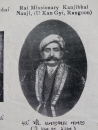
Rai Hirji was a famous for collecting religious dues in Indian villages during the period of Imam Hasan Ali Shah and visited Mahallat to deliver it. His son Varind was also a devoted and became the Mukhi of Kandi Mola Jamatkhana, Bombay and served in the period of three Imams. His devotion can be measured from the saying of Imam Hasan Ali Shah at Wadi, Bombay that, ' My son Aly Shah is my one eye, while Varind Mukhi represents my second eye.'
- Read more
- 13928 reads
103. Virji Premji Parpiya, Wazir - page 431
Virji Premji Parpiya traced his lineage from his ancestor, called Khoja Bhalo (d. 1607), who lived around 1154 at Lohgadh in Punjab, belonging to the Lohana class in the Rajput stock. He embraced Ismailism by Pir Dadu (d. 1596) and with the request of Rao Bharmal (1585-1631), the ruler of Kutchh, Pir Dadu left Sind and arrived in Kutchh with Khoja Bhalo in 1587. Bhalo was employed to a high post in the state administration. He was followed by his son Lakho (d. 1629), Khetasi (d. 1687) and Banno, who died in Delhi in 1715. His son was Jivo (d. 1752), whose son was Ebhalo (d.
- Read more
- 13887 reads
87. Rahimtullah A.C., Wazir - page 350
Among the predecessors of Wazir A.C. Rahimtullah, Piru Dewani deserves special attention. He was a devout Ismaili in Kutchh in the period of Imam Abul Hasan Ali (1730-1792). His son was Fadhu who followed the footprint of his father. His son Mukhi Rai Rahimtullah was a famous social worker in Kutchh in the time of Imam Shah Khalilullah II and Imam Hasan Ali Shah. In 1825, he immigrated to Muscat when plague epidemics broke out fiercely in Kutchh followed by a severe famine. He started his small business in Muscat. Captain W.F.W.
- Read more
- 11372 reads
88. Rahimtullah Muhammad Sayani - page 355
He was born in Bombay on April 5, 1847. His grandfather Sayani was a respectable merchant in Kutchh and came to Bombay. His father, Muhammad Sayani admitted his son, Rahimtullah in Elphinstone School, where he matriculated at the age of 16 years. He passed his B.A. examination in 1866 and M. A. in 1868. He was not only the first Muslim who had obtained this honorable degree, but also no Muslim obtained it during the next 25 years.
- Read more
- 10495 reads
77. Muhammad Hasan A. Fazalbhoy, Wazir - page 311
He belonged to well-known Fazalbhoy family, whose all members have been closely connected with the community services. He graduated in 1924 and passed LL.B. in 1926 from Bombay University. He passed the Solicitor's examination in 1928, and became the Partner of Perera Fazalbhoy & Co., the famous Solicitors and Notary Public since 1929. He practiced in Bombay and earned a highest respect in all quarters in the legal circles, in public life and within the community. He was well respected by the Bench and the Bar. In youth, he was the Joint Secretary of Historical Society with K.T. Desai.
- Read more
- 13460 reads
89. Rajab Ali Megji, Varas - page 357
He was born on February 9, 1908 in
India. He also made his footing in East Africa for better prospect. After
working for two years in the firm of Varas Alidina Visram, he proceeded to
Kilosa. In 1938, he joined his father in agriculture enterprise, procuring sisal,
sugar cane, maize and sorghum. Since then the whole family of Rajab Ali Megji
had been in agricultural activities. It can be said that the family’s
undertaking in planting sugar in Kilombero helped to open up the Kilombero area
where today the Kilombero Sugar scheme is yielding massive benefits. With
- Read more
- 10054 reads
60. Karam Hussain, Missionary - page 235
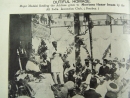
The Shamsi Ismailis in Punjab, the followers of Pir Shams (d. 1356), mostly practiced the Ismaili faith in solitude in the garb of the Hindus, and became known as the gupti (secretive). These gupti Ismailis mostly resided in 73 different villages in Punjab. Most of them revealed themselves from the Hindu culture, and emerged in public and assumed the Islamic names soon after the orders of Imam Sultan Muhammad Shah in 1910. The Imam is reported to have issued his next orders in 1912, 1914 and 1916 to cut down the old customs of Hindu customs and become practicing Muslims.
- Read more
- 14063 reads
78. Muhammad Ibrahim M. Rawjee, Dewan - page 312
Muhammad Rawjee, the grandfather of Muhammad Ibrahim Muhammad Rawjee was born in Bombay on 1830. He got married at the age of 16 years in 1846. It is said that he was the first amongst the Indian Ismailis to have visited China at an early age in 1853, where he opened his branch. Initially, his business ran on partnership, but he alone conducted it after some time. He was noted for initiating many welfare institutions in 1883 and donated free houses to over fifty Ismaili families without charging rent, which was named after his father-in-law, Dhanji Karmali.
- Read more
- 17241 reads
90. Rajan Lalji, Count - page 358
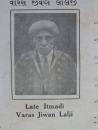
He was born in Jamnagar, India in 1887. In search of better prospect, he came in Zanzibar in 1900 and then went to live in Kisumu in 1903, and Nairobi in 1905.
- Read more
- 12505 reads
62. Karim Ibrahim, Sir - page 243
Karim Ibrahim's father Ibrahim Pabani came from Mandavi, Kutchh. He was an eminent owner of the ships, sailing in Arabian and Zanzibar coasts. He had three sons - Ladha, Datoo and Karim. Ibrahim Pabani died in 1857.
- Read more
- 11480 reads
91. Saboor Chatoor, Wazir - page 360
Kanji, a certain Ismaili was an origin of Limadi, Kathiawar. His son, Visram was a prominent person. Punja, the son of Visram was a famous merchant in Limadi, and his son Amarsi had three sons, Nur Muhammad, Pirbhai, Saboor and two daughters, Mannibai and Satbai. Among them, Saboor or Saboor Chatoor was most prominent in the Ismaili world.
- Read more
- 13112 reads
63. Karim Ismail Mansawala, Varas - page 245
Varas Karim Ismail Mansawala, the first title holder of Varas among the gupti Ismailis of North Gujrat, was born in 1867 in Mansa, Gujrat and came with his family to Bombay at the age of 6 years in 1873.
He witnessed last 14 years of the Imamate of Imam Hasan Ali Shah, and blessed with the dastboshi. When Imam Hasan Ali Shah passed away, in 1881 and was buried in Hasanabad, he joined with the labourers in the construction of the mausoleum. Varas Karim Ismail Mansawala also present during the ascension of Imam Aga Ali Shah and took oath of allegiance.
- Read more
- 11468 reads
80. Muhammad Murad Ali Juma, Missionary - page 318
Missionary Muhammad Murad Ali Juma, known as Bapu, a term of respect for an elderly man; was born in Bombay in 1878. His mother expired when he was hardly a year old. His father did not marry a second time for the sake of his son.
- Read more
- 16961 reads
64. Karim Kassim, Varas - page 247
Karim Kassim was the younger brother of Varas Bandali Kassim (1875-1956). He was born in 1878 in Karachi, where he acquired his formal education from Sind Madresa-tul-Islam School upto fourth class. He held a strong command in English, Gujrati and Sindhi languages. Muhammad Ali Jinnah, the founder of Pakistan was his classmate.
- Read more
- 12186 reads
79. Muhammad Jamal Khan, Mir - page 315
Mir Ghazanfar Ali Khan (d. 1864), the ruler of Hunza State in the northern area of Pakistan, was succeeded by his son, Mir Muhammad Ghazan Khan I, whose successor Mir Safdar Ali Khan had taken refuge in Shagnan during the British invasion in 1891. The British commissioned his half-brother, Mir Muhammad Nazim Khan as the ruler of Hunza. Mir Muhammad Ghazan Khan II and then Mir Muhammad Jamal Khan followed him.
- Read more
- 20935 reads
65. Kassim Ali Hasan Ali Javeri, Chief Wazir - page 249
Sayed Imam Shah (d. 1520) is said to have launched a brisk mission in Gujrat. He converted a certain Khoja Jiva in Khambat, Gujrat. Khoja Jiva was well rooted in Ismailism and he himself converted large number of Kanabi caste of the Hindus, notably Motilal, Daya Ram Nathu, etc. The descendant of Motilal migrated to Surat during the time of Imam Nizar II (1585-1628), who deputed Sayed Abdul Nabi in India, whose tomb is in Kankara Khadi, near Surat. He was followed by the vakils, Hasan Pir (1652-1715), Sayed Ghulam Ali Shah (d. 1792), etc.,
- Read more
- 19611 reads
66. Kassim Ali Muhammad Jaffer, Missionary - page 254
Saboo, the great grandfather of Varas Kassim Ali lived in Jerruk, Sind. His grandfather, Karmali and his family known as the Sabooani family migrated to Karachi and settled in the location of Kharadhar. The father of Varas Kassim Ali was Muhammad Jaffer (1856-1946), served as a volunteer, and supplied the vegetables and fruits daily in the Honeymoon Lodge for Imam's family. In 1920, he generously contributed funds in the building of the premises of the Baitul Khiyal in Kharadhar Jamatkhana.
- Read more
- 18815 reads