 Ismaili.NET - Heritage F.I.E.L.D.
¤ Books
I - The Divan
I shall turn over a new leaf, and whatever
is better, that shall I make my minds aim.
The world of April - for instance -is an emblem of delight:
shall I not by contemplation make my heart fresh as Spring?
On the green lawns and beds of this my poetic Divan
I shall weave lines and feet into hyacinths and sweet basil,
meanings and allusions into ripe fruit and plum roses,
and grow great trees from tiny seeds of precise words.
Clouds make a deserts jaundiced face a garden -
thus shall I too rain gently on my books face
- Read more
- 4870 reads
Nasir-i Khusraw and His Diwan.
During our months of working with Nasir-i Khusraw we acquired an almost physical picture of him, almost a memory in reverse, becoming clearer rather than more vague with time.
- Read more
- 5196 reads
5. Conclusion.
It is hardly possible in such a brief introduction to deal with all the facets of Ismaili thought as they deserve to be discussed (and for this reason a bibliography of further reading has been supplied), or indeed with all the facets of Nasir-i Khusraws many-sided-genius. The few points we have discussed are meant only to serve as a guide for a summary understanding of this remarkable Islamic philosopher and poet, who in many ways bought the Ismaili tradition of philosophy to its apogee.
- Read more
- 1968 reads
4. Ismalism.
From an historical point of view, Shiism is based on the doctrine of the spiritual pre-eminence of Ali, the cousin and son-im-law of the Prophet. Shiites quote many sayings of Muhammad in support of this, and point out that the Prophet gave his only daughter, Fatimah, to Ali in marriage. Ali is to me as Aaron was to Muses, except that there is no prophet after me. I am the City of Knowledge and Ali is the Gate; do not enter the City except through the Gate. According to the Shiites, the Prophet expressly appointed Ali as his heir (wasiy) and spiritual successor (khalifah).
- Read more
- 2907 reads
3. The Diwan.
Nasir-i Khusraw is one of the few poets in the history of Persian literature to be given the honorific title of Hakim of Sage. One can compare this with the same title among the pre-Socratic Greeks. He is one of the early links in that chain of metaphysical peotry, so rich and prolific in Persia, which was continued by such figures as Rumi, Attar, Sadi and Hafiz. But more than other Nasir is a preacher of philosophical wisdom; he never loses an opportunity to encourage his reader to become wise, illumined, awakened.
- Read more
- 2445 reads
2. Works.
Besides the Diwan which will be dealt with later, the works of Nasir can be enumerated as follows:
Rawshanai-namah (The Book of Light), a poem of 582 lines in the Berlin edition. Ivanow suggests 444/1053 as the probable date of composition. Ismaili concepts of Divine Unity, Logos, Universal Soul, the human soul and its becoming, the necessity for a spiritual guide, reward and punishment in the hereafter are discussed it is also known as Shish fasl (Six Chapters), under which title it has had extensive influence on later Persian poetry.
- Read more
- 2497 reads
1. Life.
Abu Muin Nasir-i Khusraw, ranked among the half dozen greatest poets of Persia, was born in Qubadian, a small town in the region of Marv, in 394 A.H./1004 A.D. Little is known of his childhood and early years except for a few references in his book of poetry, the Diwan, and his philosophic works. Our information concerning his life is largely derived from his travel boo, which he composed after his seven year journey through the Islamic world as far as Egypt and back again to his native land.
- Read more
- 3319 reads
Introduction By Gholam-Reza Aavani
5-part Introduction
by Gholam-Reza Aavani,
Tehran, May 26, 1977.
- 6077 reads
Forty Poems from the 'Diwan' of Nasir-i Khusraw - Translation
Journal Article
By Gholam-Reza Aavani and By Peter Lamborn Wilson
Includes a translation of the Forty Poems
From Nasir-i Khusraw's Diwan.
- 8535 reads
C. The Qadis And Polygamy
The qadis' approach to polygamy is ambivalent: both religious and secular. They chiefly refer to it in the context of religious law and of custom.
- Read more
- 2857 reads
B. The Ban On Polygamy Put To The Test Of Reality
How does Druze society, mainly still patrilineal and patriarchal, react to the ban on polygamy, adapted to the nuclear family and relying on both religious-ethical and secular-penal sanctions? The wording of the religious-legal ban suggests that it was imposed from above on a society in which polygamy was an accepted norm.
- Read more
- 2335 reads
Polygamy and the Druze Family in Israel
Journal of The American Oriental Society
Volume 99/Number 1/January-March 1979
Polygamy And The Druze Family In Israel *
By: AHARON LAYISH
The Hebrew University of Jerusalem
- Read more
- 3396 reads
The `Das Avatara' of Satpanthi Ismailis and Imam Shahis of Indo-Pakistan.
The full text of Gulshan Khakhee's thesis is attached to the bibliography link.
- 4601 reads
The Aga Khan III and His Ancestors by N. Dumasia - Book in PDF format
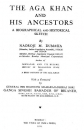
Written by Dumasia in 1939 when Aga Khan III was still alive, this book covers a number of years of the Imam's life and shows his long lasting influence on the world scene from a very early age.
Download attachments links below.
Click on the pdf to read the full text. The 375 pages of the book are divided in 2 parts (10 MB each.)
- 7644 reads
Pyara Imam Ni Pyari vato (Wato)
This book is available in Gujarati language audiobook format in 9 mp3 files.
Unfortunately, part 4 is missing - please write to heritage@ismaili.net if you have it.
- 14873 reads
2012-05-14 Refusals Hearing in Copyright Lawsuit
As reported to us by an observer who attended the hearing (Hearings are open to the public)
- Read more
- 20224 reads
2011-07-18 Reply to the Requisition
On July 18th, 2011, the defendants replied to the Requisition and statement of issues served by the Plaintiff's Counsel in March.
Although the Plaintiff party has implied that they want the proceedings to end, the Plaintiff's counsel is continually showering the defendants with proceedings. They continue to insist for a private discovery apart from the reference that was ordered.
- Read more
- 24538 reads
2011-06-16 Appeal Factum Against Summary Jugment - Filed by Defendants.
On June 16th 2011, The Defendants filed, in the Federal Court of Appeal of Canada, the Memorandum of Fact and Law for the Appeal against the Summary Judgment.
Inexplicably, on June 14th, immediately after the defendants served him with the document, the Plaintiff's Lawyer, Mr Gray, leaked the information to a newspaper dedicated to demeaning the defendants, two days before it was filed in court.
- Read more
- 22080 reads