Travel from Bombay to Najaf
(via Karachi, Gwadar, Port Abbas, Bushire, Basra, Kazamin & Karbala)
Narrated by Mukhi Kassim Musa (d. 1314/1896)
Translated with comments by Mumtaz Ali Tajddin S.Ali Email : alymumtaz@yahoo.com
01. Introduction
Mukhi Kassim Musa (d. 1896) was the Huzur Amaldari (officer in presence) and an estate agent of Imam Hasan Ali Shah. He was also a close attendant of Imam Aga Ali Shah and Lady Aly Shah. He was also once sent by Imam Hasan Ali Shah in Iraq. When Imam Aga Ali Shah expired in Poona in 1885, his holy body was shifted to Bombay, and then shipped for interment in Najaf according to the will of the Imam. Mukhi Kassim Musa was consigned the responsibility of transporting the bier in Najaf. He wrote the account of his brief journey of 25 days between October 28, 1885 and November 11, 1885. The ship first anchored at Karachi harbour, then Gwadar, Port Abbas, Linga, Bushire and Basra. The caravan then proceeded from Basra to Kazamin by a steamboat, and moved on foot from Kazamin to Karbala, and finally to Najaf in the form of a procession. The whole account is very interesting. He also provides valuable information of Karachi, Port Abbas, Linga, Bushire, Basra, Karbala and Najaf.
His written narration or the Safar-Nama is in Gujrati. Its few pages were published by Aladina Ghulam Hussain in Rippon Printing Press, Kalbadevi, Bombay in 1886 without any heading. The pamphlet reads, “The special report received from Mukhi Kassim Musa regarding the carrying of the bier of His Highness late Agha Ali Shah.†The original text is not accessible. Chief Wazir Kassim Ali Hasan Ali Javeri (1877-1968) had unearthed it in decaying condition. He copied it word by word by his own writing. In 1967, he visited Karachi and allowed Rai Abdul Aziz Rai Abdullah (d. 2006) to copy it on July 17, 1967. I got its copy in 1990 and translated into English in 1992. Since I was much engaged in compiling my books, I could not continue to work on it. After the publication of my book, “Encyclopaedia of Ismailism†in 2006, I started to work on it.
The Gujrati manuscript is 7â€x6½†in size in 47 folios. It appears that the narrator (Mukhi Kassim Musa) wrote the account at the end of 1885 or in the beginning of 1886. Sometimes he gives long and unnecessary accounts, and repeats the different sentences in other style. He however seems accurate in giving the dates and times. He constantly used the term “Mughal†for the Persians residing in Hasanabad, Bombay as well as for the Shi’ites of Port Abbas, Basra, Karbala and Najaf. In sum, it will be perhaps safe to believe that the narration of Mukhi Kassim Musa mostly resembles the contemporary Persian work, “Safar-Nama Nasiruddin Shah Qajar†by an anonymous writer - a diary of the pilgrimage of Nasiruddin Shah Qajar of Iran from Iran to Najaf in the year 1880.
02. Translation
Dhani Salamat Datar Hazrat Mawlana Imam Sarcar Aga Ali Shah (1) expired in Poona on August 17, 1885 at 5.30 p.m. (2). Its news was routed to Bombay by telegram at 8.00 p.m., whose jamat set out for Poona in a special train on next day at 8.00 a.m.

The holy body of the Imam was taken to railway station from the villa, lying at Civil Lines on August 19 at 9.00 a.m. Before a day, a concourse of the Ismailis of Bombay and Poona thronged at Imam’s villa. The holy body was kept in a coffin box at first and was followed by the funeral service. It was carried to railway station in the form of a procession. The sobbing multitude of Ismaili men and women walked on the way (to the station). The banners, fruits and sweetmeats were also taken in the procession. The train was to depart at 10.30 a.m., and a big concourse of people flocked on the station. The engine was joined with 20 buggies, wherein 15 belonged to the third class. The coffin box was placed in the first class compartment, draped with a silken sheet, and the sweet-scented flowers were spread over it. The smoke of frankincense was also fumigated. Two banners were planted in front of the engine. The Ismaili missionaries and Imam’s households were in the buggy, which was loaded with the coffin. The train was absolutely jampacked. Fruits and sweetmeats were distributed to a large number of poor and beggar on the station.
The special train started at 10.30 a.m. with a mild chanting of kalimah and salwat, and reached at Baikhala station, Bombay at 4.45 p.m., where a huge crush of the Ismailis stood in waiting. Some Ismailis got the coffin out from saloon with the muttering of salwat in deep reverence and veneration. The coffin was pitched on the country-cot, curtained with scented flowers and covered with a green umbrella. The people marched with the country-cot (or bier) in a procession, and the sobbing multitude followed in lamentation.
Two standard-bearers took the precedence, who were followed by 101 men carrying plates of fruits and sweetmeats on heads, and behind them was the march of 8 elegantly clad and attired horses of late Aga Ali Shah. A favourite horse of the Imam, elegantly caparisoned in silver followed them. Two horses caparisoned in silver filigree and embroidery followed it. Two preachers, discoursing on horses were moving in rear. Next appeared two horses in succession, loaded with shields, swords and weapons, and the bier of Aga Ali Shah trailed after them. A great crush of the somberly Ismaili men and women and the Iranians trudged along on foot, and reached to the residence of Imam at Wadi. A bulk of Iranian ladies gushed from Imam’s residence with strong expression of grief and rushed towards the bier to kiss and touch the flowers with tears rolling down from eyes. The procession proceeded slowly and slowly at Hasanabad, where is also the shrine of Imam Aga Shah Hasan Ali (3). The womenfolk of Imam’s household, the Ismaili and the Iranian cast somber in such a boisterous touching that a hardest heart could seldom bear it. The believers lifted the bier with reverence and veneration, and deposited it in the shrine of Imam Hasan Ali Shah. It was enshrined there temporarily for 64 days and transported afterwards for Karbala.
The mortuary procession carrying the bier dispatched from Hasanabad on October 25, 1885. Eminent persons participated to pay tributes, such as the Nawab of Khambat, the Governor of Bombay, Mr. Mannek Khurshidji Sharef as well as the distinguished leaders of different communities of Bombay and the Ismailis, viz. Mukhi Ladak Haji, Kamadia Ismail Kassamani, Kamadia Muhammad Choth, Sir Tharia Topan, Muhammad Rawjee, Kassim Musa, Haji Lalji, Dharsi Jessa, Visram Ibrahim, Jairaj Pirbhai, Karim Ibrahim, Khaki Hema, Sharif Gangji, Moloo Jan Muhammad, Jafar Pradhan, Ismail Khairaj, etc. A large number of the Ismaili leaders of Kutchh, Karachi, Kathiawar, Gujrat, Sind and Zanzibar and a flood of the Ismailis were reverently walking in lamentation, muttering kalimah and salwat. The Ismailis of Bombay had closed their business, shops, mills, etc. on that day.
Dhanni Salamat Datar Noor Mawlana Aga Sultan Muhammad Shah and Sarcar Mata Salamat Nawab Alia Shams al-Mulk Lady Ali Shah, etc. also walked with the bier. Some held 125 plates of fruits and sweetmeats, and were followed in succession by another 125 Ismailis, carrying banners and muttering salwat with tearful eyes. Special horses followed them with grooms, caparisoned in golden and silver, which were ridden by Aga Ali Shah. Behind them appeared six horses loaded with swords and another six that of shields, and five another mounted by the Iranians. Next followed two preachers, discoursing on horses. The three cavalcades of the last five held three specific banners of the period of Mawla Mushkil Kusha, and are usually taken out on special occasions. Four horses, named zuljinah and the bier trailed after them. The interior and exterior portions of the bier were wrought in silver filigree. Nothing was left to spend in its embellishment. A big green umbrella was spread over the bier, wrapped by a red stripe in the middle. The umbrella was carried by four persons, whose each corner was planted by banners. Variety of bunches of embroidered silver flowers were draped over the bier. The brothers of Imam Aga Ali Shah also followed the bier, viz. Aga Jhangi Shah, Aga Akbar Shah and Mirza Hussain Khan and other relatives, invoking kalimah and salwat.
A folk of ten thousand bewailing men and women trudged along the procession. Some gloomy women were marked at the balconies, offering farewell prostrations to the bier and invoking salwat with tearful eyes. The procession landed at Karnak port at 4.30 p.m. and the coffin box was shipped with honour. The ship was to sail after two days, i.e., on October 27, 1885. It was resolved to bring it on October 25, owing to the completion of 64 days between August 19 and October 25. Hence, October 25 was tipped as most appropriate time for departure (from Hasanabad).
Fifty persons from Imam’s households and two officers of Imam’s staff, i.e., Kassim Musa and Noor Muhammad Ratansi were to embark with bier. The steamer was chartered for Rs. 5500/- from Bombay to Basra, and the Imam had arranged the provisions and expenses of the passengers. Rs. 20,000/- incurred on October 25. The fruits and sweetmeats taken in plates were doled out to the poor at Karnak port as a niaz. The police security was adequate at the port. Nonetheless, the Ismaili crowd dashed on the board to be destined of making a farwell touch to the coffin. Imam-e-Zaman Aga Sultan Muhammad Shah also boarded with households, where he stayed for hours. Khan Saheb Mir Abdul Ali, the head of the Deductive Department, Mr. Bruin, the Police Superintendent and Inspector Butterfield, etc. also walked with the procession, and maintained the administration excellently.
Having offered farewell tributes with tearful eyes to their deceased Imam and made cash offerings according to their position and intention, the believers got out of the ship in extreme gloom. Some walked back to their homes at evening, and few others stayed in the ship. The people however were coming and going on next day. The ship pulled up anchor on October 28, 1885 at 3.30 p.m. and not on October 27, 1885. The pilot passed the ship safely upto the last end of the port, and then it was navigated in the Arabian Sea on an open route (4).
The ship anchored at Karachi port at 12.00 at night and a pilot came from the shore and dragged it ashore in early morning. Besides the jamat of Karachi, the dock was absolutely flooded by the jamats of Sind and Punjab. The point on the dock where it was decided to anchor, was filled up already by another ship, therefore, the ship was anchored to a little distance on another dock. Thus, the people and the leaders on the dock began to run jostlingly to another dock. The multitudes muttered salwat somberly. They had carried the emblems and plates of fruits and sweetmeats. The jamats of Karachi, Sind and Punjab boarded with ladders. The men, women and children made infantile weeping and demonstrated deep love and devotion for their Mawla. The non-Ismailis also joined in sobbing at that moment. The coffin was got out from the ship submissively, and the serious procession carrying emblems and horses landed in the town.

The procession proceeded towards the newly built jamatkhana in Kharadhar (5). It appeared from the procession marching towards Kharadhar Jamatkhana that there would have been not a single person in the town, who had not been at the port, which denoted a high degree of their unwavering devotion and dedication to the house of the Imam of the time.

The port in Karachi has been recently built (6). The post and telegraphic offices at the shore are known as Keamari, adjoined with a refreshment room (7).

The town is void of horse-tram like in Bombay, but it has the trams hauled by steam traction. It has a big railway station. M/S Johar & Ltd. Co. owned the tramway. The ticket rate is reasonable and fairly negligible for all. The tramway is in good condition. The engine hauls 3 to 4 carriages, each can accommodate 48 passengers, having second and third classes. It runs at the speed of 8 to 10 miles per hour. Besides, other licensed vans, buggies, four-wheeled carriages, etc. of first and second classes are available at port in uncertain and negligible rates (8).
Karachi is under development both in trade (9) and population, where the products of Sind are exported. It is one and only port of Sind, Makran and surrounding regions. The town looks antiquated and ungainly at first glance. Good houses are built recently, exercising the specimens of the architecture. The town is divided into two parts. One is parted for trade and inhabitation, known as Kharadhar. Another part is little far, known as Saddar, where is a military cantonment. The military town is beautiful with wide roads, fashionable hotels and stores mainly dominated by foreign merchants, where exist gardens and elegant edifices.

The biggest bazar, known as Empress Market is open between 5.00 a.m. and 10.00 a.m., stuffed with victuals in abundance, like vegetables, mutton, chicken, duck and fish (10). Its upper direction from left side is joined with a series of grooves and gardens, belonging to our Ismailis (11).

There is a public park and pretty well villa of the Imam. Aga Ali Shah liked its climate and water, therefore, he resided here 3 to 4 months in a year. Big compounds, facing the public park surround the villa, and whose big gate was built by Aga Ali Shah (12). There is a big piece of land in its surrounding, where the Ismailis who emigrated from Kutchh, have concentrated in cultivation for their livelihood. They earn their sustenance as dealers of vegetables and fruits. The courage and zeal of the emigration of the Kutchhi Khojas reflect when one looks on their grooves and gardens. The Sindhis, Baluchis and Makranis chiefly form the greater part of the population of Karachi (13).
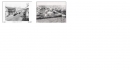


The town is congested with narrow passages radiated in the markets. It is an old location, therefore it does not look elegant. Most of the merchants are the Khojas and Hindus. The Ismailis reside thickly at the edge of the town in Kharadhar. They have built a big jamatkhana and presented to Mawlana Hazar Imam, where the bier of the Imam was kept for three days, and the people were flocking whole day. The food of niaz was cooked at Kharadhar jamatkhana for the jamat, who afterwards carried the bier with due honour and turned back along the port.
Looking a massy of people at port, the greed grew in the boatmen, who resolved to claim four annas instead of one per head. The leaders of Karachi thus, discussed with the Englishmen and arranged a steamboat. The people boarded the coffin and also themselves with the help of the steamboat. The boatmen became jealous and repentant and at last offered two passengers in one anna, but none responded to their offer. They became angry and hired a European lawyer in the town. The lawyer disputed with Captain Parker, why he had given a steamboat against the traffic rule. The lawyer and boatmen started hooting afterwards. The English lawyer exhausted and took his fees from boatmen and returned to the town. The boatmen also sat aside, smearing their hands.
The pilot took an anchor at 5.00 p.m. and steered at 6.30 p.m., and returned at the port by an arriving Gulf Cargo of B.E. The passengers of Bombay and few men, women and children of Karachi also joined to carry the coffin at Karbala. It reached at Gwadar on November 4 at 12.00 p.m. (14). It was a night hour and the Captain was also unacquainted with the shore, it was therefore anchored at midstream. The Captain lifted anchor at daybreak and harboured at 8.00 a.m.
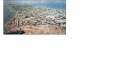
Gwadar is dominated by the Sultan of Muscat. It is the only shore of Makran (15) and Baluchistan, dominating a sizable trade. There are only 30 to 40 households of Ismailis of middle class and are ardent devotees, adhering love to the house of Imam beyond limit.
The men, women and children of whole jamat of Gwadar had assembled at shore, reciting salwat with tearful eyes while looking the ship. Few old men and women sobbed convulsively like the infants. Soon after the anchorage, the jamat boarded by a ladder to bid farewell tributes to the holy body of their beloved Imam. They bowed their heads with much solemn gravity, and made cash offerings with the intention of hearts.
The ship was chartered at Bombay (for Basra) for Rs. 5000/- but due to the earnest request of Gwadar jamat, it was also made junction at Gwadar. It was decided to pay an addition sum of Rs. 500/- to them. After spending a day, the ship pulled up anchor at 4.30 p.m. and the sobbing jamat got out of the ship. Two persons of Gwadar jamat also joined with us.
On November 6, at 12.00 p.m., it anchored at Bandar Abbas of Iran (16). The hawkers in the vessels brought vegetables, fruits, breads, dates, etc. from the shore. Bandar Abbas is congested and old, designed in Iranian style. It has commercial ties with Kirman and Shiraz. About 30 Ismailis resided, who were staunch followers, but now are imperfect and seceded due to bad company. Nonetheless, few women came on board to pay tributes. Some men also came on next day and victualed with one shawl, goats, rice, ghee, etc. Some made cash offerings. The ship set out on November 7 at sundown.

The climate of Bandar Abbas is not pleasant. It is populated by the Sunnis. Besides, the cross-race of native Iranians and Makrani Iranians also resided. The Iranian currency is in circulation and is under the control of Iran.
Port Linga (17) arrived on November 8. It looked far better and green in comparison with Bandar Abbas to some extent. It is a trade centre with no pleasant climate.
The ship then steered ahead and shored at Bushire on November 10 at 11.00 a.m., which is also called Abu Shaher (18). It was shallow water on the mouth of the shore, therefore, the ship was not taken inside and anchored ashore in the morning.

The town is not so big, but well built. It has court and offices of the embassies of Iran and England. It enjoys mercantile relations with Shiraz and Ispahan. It has one Custom House. The merchandise is imported and exported to Europe. An opening of a municipality very soon is heard. Its further accelerations are anticipated in near future. Malik is a rich person over here, who has erected factories of ice, soda and flour as his hobbies, which are supervised by a German. The anchor lifted on November 11 at 5.00 p.m. It is curious that the town is inhabited exclusively by a single Ismaili. It has a pleasant climate. The Iranians are populated thickly. Recently two Memons have come to seek their livelihood as the retail dealers. Few Iranian and Khalu leaders, the friends of Mawlana Hazar Imam boarded for paying tributes. We welcomed them with due courtesy, and tea was served according to established custom. Before leaving for Basra, a daily informal assembly frequented with them on every evening at deck, followed by dinner. Besides, the mullahs were fed and paid for recitation (of Holy Koran).

The ship then anchored five miles from Basra (19) in Euphrates River on November 12 at 7.00 p.m., where it was compulsory to stay within the circuit of the quarantine zone for 24 hours. It was not suggestible to relieve from its formalities at night, therefore, the ship anchored on following day at 8.00 a.m. in the segregated zone, about two miles from Basra as decided by the Turkish government. Specific quarantine flags were hoisted. The Turkish officers and doctors came later on and talked at a distance. Sheikh Haji Muhammad, the chieftain of Kazamin, Mustapha Khan and Imam Varind Khan, etc also came from Baghdad in a vessel and chatted at a distance. The custom vessel arrived, and two policemen came on board to collect report. They were assured that the people in the ship had no concern with any other, and thus they had gone. The doctor also boarded on next day, and after an examination, he ordered to take off the quarantine flags and relieved us. He went after charging ten annas per head as his fees. (Thus, the ship was allowed to shore at the port of Basra). The friends of Aga Ali Shah in Basra also arrived by vessels, viz. Essa bin Kartush, Sayed Nafi, some Turkish mullahs, Iranians, Haji Mustapha Khan, Haji Muhammed Saleh, etc., about 200 to 250. They deeply expressed condolence and frequented a grand informal assembly on board, where the black coffee was served to them. They said, “We understood that the Lord would come on hunting expedition and pleasure trip. Alas! The Lord came in such a condition that our desires remain unaccomplished in hearts. We are greatly gratitude to him. Whenever we happened to go Bombay, we enjoyed Lord’s hospitality.†They further said somberly, “It was better if we had died instead of the Lord, so that we have not seen such grievous hour.†They continued to lament for a long hour and asked at length, “How many persons are with you?†We told that we had two hundred persons. They said that, “You all are our guests. We have been so touched with the goodness of the Lord that cannot be substituted. We intend to disembark the bier and give shoulders (on the shore) and you also join us.†We (Mukhi Kassim Musa) said, “We have been commanded by Imam Sultan Muhammad Shah Datar to reach Karbala before the chihlam of Imam Hussain. We will transship from here for Kazamin, therefore, we cannot alight from ship to accede your offer.â€
Few opulent Arabs exercising influence in Turkish government supplied food, lambs, goats, sheep, ghee, rice, etc., for the passengers. They however arrived on next day by steamboats and said, “We have good relations with the Turkish government, and the Turkish ambassador also knows the Aga Khan in Bombay. We will cable him for one steamboat of Turkish Sultan.†Thus, they cabled and arranged a steamboat, ranged by banners and standards depicting the symbols of mourning. The coffin, baggages and the people of the caravan were transhipped. It sailed (from Basra) to Kazamin. The steamboats are generally allowed to sail till Baghdad, but our boat was allowed to sail as far as Kazamin by opening the bridge.
Kazamin is five miles from Baghdad. For making a relief from unloading the coffin and baggages at Baghdad, the bridge of the Tigris River was lifted, so that our craft could steer to Kazamin directly. The bridge is not lifted for any one, but it was facilitated due to the regard and love of the Turkish Efendi Officers with the Imam (20). Another order also was issued that the bier of Aga Ali Shah might be accorded royal welcome at the port of Kazamin. Hence, five hundred infantry came at the port and paid a royal tribute with musket shots.
Tajmah, the sister of Aga Ali Shah resided at Kazamin, who had come with her people, carrying 150 plates of fruits and sweetmeats, which were distributed among the poor. The attired horses and some other bearing emblems were also brought at the port. The father-in-law of Pir Shihabuddin Shah is an eminent person in Kazamin, who had ordered to close the transactions and shops in the town. He also came with his men at the port. A huge mortuary caravan of 15 thousand people trudged. Some Arab and Iranian women also marched in seclusion, groaning and chanting salwat. Thousands of eyes were brimful with tears. Some persons led the horses in front.
The scene which met our gaze was so touching that we inclined to think that these were not the Ismailis, why they lamented for the Imam? Being asked, the Mujtahid said, “The first reason is that Aga Ali Shah traced his lineage from Holy Prophet and Ali. Secondly, he had built here a big hospice with provisions. Thirdly, he is the grandson of Bibi Sarcar, or Pir Sarcar Mata Salamat, the wife of Imam Shah Khalilullah; and he is also the son of Sarcar Aga Shah Hasan Ali, the King. Fourthly, he was firstly married to the mother of Aga Shihabuddin Shah in Najaf and on that occasion, his grand-mother, Sarcar Mata Salamat had distributed five plates of fruits and sweetmeats in every house in Kazamin, Karbala and Shah Najaf. When Bibi Pir Sarcar Mata Salamat expired in 1877, we had been assured by Aga Ali Shah that we should not be worried for our provisions and livelihood till he was alive. We have been getting funds regularly from his house since then. Our Sayed children are being educated by him. The facilities of water and water-tank are provided by him. His house is the house of the progeny of the Prophet. He is one who enlightens the light of religion. His house is famous for generosity from the time immemorial. The ocean of generosity springs from his house. The tradition of Holy Prophet also relates, “I leave behind two things. One is my Ahel Bait and second is Holy Koran.†We are extremely fortunate to touch his bier. Few other Iranians also joined as saying that Aga Ali Shah, the King descended from the Holy Prophet, and also was a grandson of the emperor of Iran.â€
The Iranian ambassador of Baghdad also attended with his staff. The solemn assemblies held for three days in Kazamin with meal that were taken by the townsfolk. It started daily from 10.00 a.m. to 11.00 p.m. Cold and sweet beverages were also served.
Meanwhile, a bulk of the friends and relatives of Imam arrived in Kazamin from Karbala, Samara, Shah Najaf and Baghdad. We started for Karbala on the third day. The cavalry of 300 soldiers sent by the ruler of Baghdad, other numerous Arabs and Iranian men and women, the Turkish officers and Imam’s relatives joined together to give shoulders to the bier. They invoked kalimah and salwat and said, “We are highly obliged to Holy Prophet and Mawla Murtza Ali, who shall reward for sharing shoulders to the bier, relating to their descent.†Some other beside them were also sobbing. The attired horses equipped with emblems also marched and the soldiers fired musket-shots.
A special wooden board had been prepared in Kazamin to place the coffin on it. Fifty horsemen took a lead in front, and other fifty followed (the bier), and each hundred cavalcades marched, enfolding it on right and left sides. They held crests and emblems in hands. Some stepped back to Kazamin after bidding goodbye at the distance of four miles. Soon after a long march, a hospice appeared in our sight at sundown, where the meal was pre-arranged. It was a biggest hospice, accommodating ten to twelve thousand persons, whose houses beheld like bungalows, and was encircled by a wall. We have traversed in India, but have never seen its equal. We drank tea and reposed. Soon after offering the dua, we dined and slept at night. Our caravan decamped and proceeded to Musa Gaib at sunrise.
We perused thence our track soon after break-fast and encamped in the caravanserai of Musa Gaib at sunset. It was also a bigger to lodge ten thousand persons. We had also dispatched here in advance some men to arrange repast. It has a big population. The water of Euphrates River is available here. According to the cable message of the Turkish General, a guard of 300 cavalry soldiers from Musa Gaib and other people with crests, emblems and horses had come to receive the bier. They gave shoulders and chanted kalimah and salwat. Soon after the encamping, we took supper and relaxed. We took break-fast in next morning and took provisions for lunch and set forth. We reached Onali at 1.00 p.m., the famous place for the graves of the infants of Muslim bin Aqil at the bank of Euphrates River, who were killed by Harris, an infidel.
We alighted for a short while for lunch and a great marvel took place in the house of Imam-e-Zaman. We had taken adequate food only for the caravan. We were about to take lunch when we saw about 400 Arabs arrived on horses at full gallop with the spears unscabbarded. We (Kassim Musa) began to think, why did these spearmen come? I could not speak Arabic, but talked through an interpreter. They said, “We came to share shoulders to the bier of Aga Ali Shah. We vouchsafed a vision at Karbala that it would be a great reward for one who touches the bier of the grandson of Bibi Sarcar Mata Salamat. The bier would arrive in Karbala at dust and the shooting of the stars would take place at night.â€
We gave our guests a kindly welcome and offered to take lunch with us. It however puzzled us, since the food we had taken was sufficient for the caravan. It could hardly serve 10 to 15 persons in addition, but not to these 400 spearmen. I recalled a saying of Pir Shihbuddin Shah that, “It is a tradition of our house that our dish contains a perpetual blessing and never exhausts a little bit, since we have been graced by the Mawla.†Besides, the Arab spearmen have also given good tidings of a great marvel. I started in the name of the Merciful God and impelled them to join with us in lunch. We ate extravagantly, and when we withdrew from meal, we found surplus food to feed further 50 persons.
We pursued thence next route for Karbala with the spearmen. When it was yet five miles, the guardians of the shrines of Imam Hussain and Abbas received us with 200 to 250 persons and brought a tomb-sheet, made of filigree inlaid with jewels, pearls and diamonds. They said, “This tomb-sheet costs fifty thousand. We have been enjoined to come here in a vision, since a coffin of Imam Hussain’s son was coming and bring it with honour.†The other multitude also assembled soon, sobbed and muttered salwat and fatiha. The musket-shots were also fired. It appears as if Imam Hussain had arranged a warm welcome and honour for his son. Numerous horsemen, the people on foot, the Arabs, the Sayeds, the Iranians, the Ismailis and the Turks exclaimed, “Nara-i Hyderi – Ya Ali†and “Anta Mawlahiâ€, etc. It conceived as if a big battle due to the sandy dust as well as the smoke of the musket-shots. We recalled at that moment the event of Karbala. The bier of Aga Ali Shah began to float on the heads of the people as if a vessel. It is a tradition of the Holy Prophet that, “My descendant is like an ark of Noah.†Besides, it envisaged the days that had been passed in service of Aga Ali Shah. I sobbed emotionally for a while when remembered the Mawla and the tears streamed out, and the other nearby also joined and muttered salwat.
Prince Amyn, the nephew of Aga Ali Shah also arrived from Karbala with his son and households. Besides, the rich Arabs, the Turks and Iranians also joined the procession in large number with crests, emblems and attired horses in lamentation.
The canal of Alakma springs from Euphrates River in the vicinity of Karbala, where Shimar, the mean had posted his guards. This canal is now turned to the town, on which a narrow bridge is built. In order to relieve from the hardship while fording the procession on bridge, the policemen were posted there under the command of the Commissioner, who helped to ford the bier with due care. Numerous people wailed while looking the horses and banners. It was a day before chihlam of Imam Hussain. No honorific bier like it had ever appeared in Karbala. Men, women and children were marching and muttering salwat. None had ever seen or heard of a big procession of the bier anywhere like it.
Countless plates of fruits and sweetmeats draping in colourful covers were carried in front. These were followed by attired horses and behind them, the Sayeds enjoying scholarship in Imam’s school were chanting elegies. The guardians of the shrines of Imam Hussain and Abbas, the Commissioner, the Chief Judge and Mujtahid of Karbala, the Iranian ambassador, etc. were uttering the very name of Mawla with due respect. It was brought in the courtyard of the tomb of Aga Noor Shah, the son of Aga Ali Shah, where the funeral service was performed. We offered the dua at sundown. The people sat in lamentation and began to wait the great marvel to be occurred at night at about 8.30 that the stars would rain down from the sky on the bier of Aga Ali Shah. It was 9.00 p.m. and we struck with amazement to see the shooting of the stars from sky like flowers. No sooner did the colourful stars fall down than we recited salwat.

The shrine of Imam Hussain is surmounted by an elegant edifice. The grave is grated with silver bars. The golden chandeliers were eye-catching. The grave of Habib ibn Mazahir lay at the foot of Imam’s grave. Thereabouts also lay the graves of Ali Akbar and those who martyred in Karbala. The school is conducted with the funds of Imam for the Sayeds. They are getting free scholarship and provisions. The shrine of Aga Noor Shah, the son of Aga Ali Shah faces the graves of the martyrs of Karbala, and it is splendid in appearance at the entrance of Imam Hussain’s shrine.
The poor Sayeds, mullahs and general public were repasted for seven days in Karbala. Those poor who demanded nothing were doled out the coins and gold in sealed bags in secret, and the receipts of which were taken to show to Imam Sultan Muhammad Shah. Seven days later, we departed for Najaf Sharif and about a thousand people and 300 Turkish soldiers followed. Tajmah, the sister of Aga Ali Shah, the father-in-law of Pir Shihabuddin Shah and his men also joined. The caravans of Sayed Jawad Mutawali and Aga Mustapha Khan also followed. A hospice of Shah Najaf appeared at evening, where few men were dispatched in advance to prepare foods. We dined after dispersal from the dua at evening. The facilities of light, water and rugs were admirable. Having passed a night, we proceeded at sunrise after breakfast. The people from Shah Najaf appeared in sight on opposite direction to welcome us. They had carried plates of fruits and sweetmeats and joined in muttering salwat and fatiha. We had with us the provisions for lunch. Soon after treading for four farsangs, a fountain of Euphrates River beheld at mid-day. We encamped for lunch, where few persons arrived from Najaf with fresh breads. We overlooked glimpse of the minarets of Najaf. We offered those persons to sit for lunch. Meanwhile, the guardians and Mujtahid of the shrine of Shah Najaf came with emblems, crests, horses and tomb-sheet of Mawla’s grave. They told, “We have been inspired by Mawla Mushkil Kusha that his son’s bier was coming to this direction, whom we should drape with his tomb-sheet with due respect and bring it to his place.†No sooner did we hear the inspiration than we invoked salwat and prostrated in the name of Mawla Ali.
We arrived at Wadi al-Salam, where the people, Sayeds and mullahs of Najaf rushed from opposite direction in lamentation (21). Numerous horses, emblems and banners were seen in the like manner that had been witnessed in Karbala. The bier of Aga Ali Shah was seen floating on the jostling crowd as if a vessel. The funeral service was held while reaching at the skirts of Najaf, and a tremendous concourse of the people congregated. The business and transactions were closed in the town. The people in procession were more than that of Karbala (22).

The tomb of Pir Shihabuddin laid over here, and also of Bibi Sarcar Pir Sarcar Mata Salamat, the grandmother of Aga Ali Shah. The bier was enshrined at first in the vault of Pir Shihabuddin Shah, having a wide space. The coffin box of Imam Aga Ali Shah was uncovered, wherein the holy body was quite fresh. The people recited salwat and kalimah loudly during interment service. It was followed by a repast for seven successive days in Najaf, which was attended by poor, rich, Sayeds, Arabs, Iranians, etc.
The shrine of Aga Ali Shah was constructed in advance. It is walled by the Chinese mould with golden grating and dome. The local cupolas and chandelier were hung and the floor was matted with Iranian carpets. It is a resemblance of Imam Hussain’s shrine, and surmounted by an elegant workmanship.
The grand shrine of Amir al-Momanin was stunning magnificence in its brilliancy among the existing shrines, whose dazzling edifice depicted as if Shah Najaf has graced a court in presence of his progeny. The golden cupolas in the minarets and the dome were glittering. The grave of the family of Aga Hasan Ali Shah lay nearby. For instance, the graves of Pir Sarcar Mata Salamat, Aga Ali Shah, Shah Abul Hasan Shah, Mawlana Shah Khalilullah, Aga Shah Shuja, the brother of Aga Ali Shah, Pir Shihabuddin Shah and his mother and Sardar Aga Abul Hasan Shah, etc. were remarkable and worthy of veneration. The mullahs recited Holy Koran according to the local tradition.
The shrine (of Mawla Ali) attracts concourse of pilgrims round the clock, where is also a grave of Prophet Adam. There is a silver grating round the grave. Few pilgrims were lamenting with solemn gravity for resort and touched the silver grating with eyes in the state of folded hands. The real grave is in an underground chamber, which is a restricted area (23). The lamps and chandeliers of crystal gold are hung in the middle.
We embraced with an opportunity of visiting the sanctuary and Wadi al-Salam. The tradition relates that the believers paying visit of Wadi al-Salam would be exempted from hellfire.
We tarried for 25 days in Shah Najaf and made secret charity of the bags, containing gold and silver coins in the name of Aga Ali Shah, and collected receipts to produce to Imam Sultan Muhammad Shah. About 30,0000 townsfolk were repasted on the last day.
Rs. 75,000 incurred from Bombay to Najaf. We bound for to Bombay after the span of 25 days’ journey. May God grant reward.
03. FootNotes
(1) Imam Aga Ali Shah, His Highness Aga Khan II (1298-1302/1881-1885), the 47th Imam was born in 1246/1830 at Mahallat, where he spent the first decade of his age. In the outset of 1256/1840, Imam Aga Ali Shah had been taken to Iraq, where he stayed a few years with his mother. Under the instruction of Iranian and Arab teachers, eminent for their piety and learning, he had been taught the oriental languages, and he achieved a reputation as an authority on Persian and Arabic literature, as a student of metaphysics and as an exponent of religious philosophy. He mostly spent his time at Baghdad and Karbala in hunting expeditions with the Iranian princes, notably in company with Zill al-Sultan, the eldest son of Shah Fateh Ali, who ruled for forty days in Iran. During the late 1256/1840, the Qajarid regime allowed Imam Aga Ali Shah to take up temporary residence in Iran.
His first marriage actualized with Marium Sultana in Iraq. From Karbala they had gone to Baghdad where they had a friendly meeting with Major Henry Rawlinson (1810-1895), the then British political agent in Turkish Arabia. He decided to take the family of Imam Hasan Ali Shah under his protection. Imam Aga Ali Shah and his mother Sarv-i Jahan Khanum (d. 1299/1882) and his wife Marium Sultana, reached Bombay in 1268/1852.
On succeeding to the Imamate in 1298/1881, Imam Aga Ali Shah maintained friendly relation with the British India that had been cemented by his father. He was granted the title of His Highness by the British government, which was officially informed to him by the then governor of Bombay on August 9, 1882.
The Qajarid king of Iran, Nasiruddin Shah (d. 1313/1896) had sent a message of condolence and sympathy to the Imam on the occasion of his father’s death. Later, a robe of honour and the emblem of Iranian crown studded with diamonds were sent to the Imam as a sign of his relationship.
He was appointed to the Bombay Imperial Legislative Council from 1880 to 1885, when Sir James Fergusson (1808-1886) was the governor of Bombay. According to Naoroji M. Dumasia in The Aga Khan and his Ancestors (Bombay, 1939, p. 61), "The nomination to the Council in those days was a rare distinction bestowed only on men of outstanding ability and high social position." He discharged his responsibilities and onerous duties in a manner, which drew admiration of all. He was also the President of Mohammadan National Association at Bombay, and an honorary patron of the Western India Turf Club.
He was well concerned about the welfare of the Ismailis in India and spared no pains in raising the social status of his followers. Destitute members of the community received generous help from time to time at his hands. He also opened The Khoja Ismaili School at Bombay and elsewhere in 1882. It was perhaps a veritable beginning of a renaissance in Indian Ismaili community, whose tradition is continued till now in the world. He promoted educational and philanthropic institutions for the Indian Muslims with the cooperation of a certain Rahimtullah Muhammad Sayani, a most enlightened member of the community.
The Imam also generated his close contact with the Ismaili communities in Upper Oxus districts, Badakhshan, Samarkand, Burma and East Africa. The growing prosperity of the Ismailis and his own towering position, earned his prestige among the Muslim population of India.
The Imam used to visit interior Sind, notably in district Thatta. He liked the climate of Karachi, where he lived in Honeymoon Lodge. After his marriage with Lady Aly Shah in 1867, the Imam moved to Karachi most probably in 1871-72, where his son and successor was born in 1877. He also built a palace in Karachi at garden zone, known as pir'ji wadi (the fertile tract of the pir), which was converted to Aga Khan Gymkhana in 1940. The palace faced the park, then known as Government Garden, and later it came to be known as Gandhi Garden. He sought permission from Heavy Napier Bruce Erskine, the Commissioner in Sind (1879 to 1887) to build a gate of the park in 1882. The Imam bore its cost, where an existing plate indicates the donation of the space for the gate.
Like his father, the Imam was closely associated with the Nimatullahi Sufi order. Before going to India, he had generated close ties with Rahmat Ali Shah, the head of the Nimatullahis, who had been the guest of Imam Hasan Ali Shah in Mahallat in 1249/1833. Subsequently, the Imam maintained his relation with Rehmat Ali Shah (d. 1278/1861). He also tied relations with Munawwar Ali Shah (d. 1301/1884), the uncle and the successor of Rehmat Ali Shah. The Imam also entertained several notable Iranian Nimatullahis in Bombay, including Rehmat Ali’s son, Muhammad Masum Shirazi, Naib al-Sadr (d. 1344/1926), the author of the Tara’iq al-Haqa’iq, who visited Bombay in 1298/1881 and stayed with the Imam for one year. Safi Ali Shah (d. 1316/1898), an eminent Nimatullahi also enjoyed the hospitality in 1280/1863.
The Imam wedded with Marium Sultana in Iraq, who died at Bombay after leaving behind two sons, Shihabuddin Shah (1268-1302/1851-1885) and Aga Nur Shah (1272-1302/1855-1885). These two sons had been brought up in Hasanabad at Bombay. Aga Nur Shah, aged 30 years, was a good sportsman. He once fell down from his horse while riding, and sustained serious injuries, which proved fatal, and his death took place three months before the death of his elder brother. The Imam appointed his elder son, Shihabuddin Shah as a pir on 1299/1882, who died at the age of 33 years on December 15, 1884. The Imam’s second wife belonged to a Shirazi family, and after her death, the third marriage was solemnized with Shamsul Mulk Lady Aly Shah.
The Imam was a skillful rider and great sportsman. He was very fond of hunting, but never made use of shelters in the hunting field for big game. Standing exposed to danger he took a sure and steady aim at wild animals. In this way he had bagged no less than forty tigers. He died on Wednesday, August 17, 1885 in Poona. (1) Imam Sultan Muhammad Shah mentioned the reason of the death of Imam Aga Ali Shah that, “My father’s death was occasioned not by any mishap when he was out after tiger, but by a long day’s water-fowling near Poona in August, 1885. There were several hours’ heavy rain, the going underfoot was heavy and wet, and my father was soaked to the skin. He caught a severe chill which turned swiftly and fatally to pneumonia. He was dead eight days later.†(Memoirs of Aga Khan, London, 1954, p. 11)
(2) Imam Aga Ali Shah expired in the year 1885. This year is marked with the death of many celebrities and eminent persons in India. For example, Sir James Edward Alexander (1803-1885), Rev. Krishna Mohan Banerjea (1813-1885), John Alexander Cameron (d. 1885), Sir William M. Coghlan (1803-1885), William Sir Hardman Earle (1833-1885), Charles Chandler Egerton (1798-1885), Walter Edward Fane (1828-1885), Sir William Robert S. Fitzgeraid (1818-1885), Naoroji Furdunji (1817-1885), Charles George Gordon (1833-1885), Arthur W. Forde (d. 1885), Charles George Gordon (1833-1885), Arthur W. Forde (d. 1885), Charlies Wood Halifax (1800-1885), Harish Chandra (1859-1885), Sir Alfred Hastings Horseford (1818-1885), Maharaja Ranbir Singh (1832-1885), William McCulloch (1816-1885), Sir William Muir (1817-1885), Sir Arthur Purves Phayre (1812-1885), Charles Raikes (1812-1885), Joachim Hayward Stocquerler (1800-1885), Hugh Henry Rose Strathnairn (1901-1885), Tarkavachaspati Taraanath (1812-1885), Ernest Trumpp (1828-1885), Richard Wadeson (1826-1885), Sir Mordaunt Wells (1817-1885), etc.
(3) Hasanabad in Bombay is a place in Mazagon, where a mausoleum enshrined the tomb of Imam Hasan Ali Shah. This edifice is a beautiful in proportions and chaste in design and of lovely materials. The single room is surmounted by a large dome beneath the centre of the tomb. On three sides of the room are large double-doors, of simple design in silver.
(4) The name of the ship according to “Nur al-Mubin†(p. 447) was Mobalo of the Persian Steam Navigation Co.
(5) The old records reveal that Imam Aga Ali Shah had appointed Ramzan Ismail Baledina as the Mukhi of Kharadhar Jamatkhana in 1882 in place of Mukhi Alleno, while the Imam retained the post of Hashim Fadhoo as the Kamadia (vide, “Saddur Court Khoja Case,†1888, p. 10). It means that Mukhi Kassim Musa came in Karachi with Imam’s coffin in the period of Mukhi Ramzan Ismail Baledina and Kamadia Hashim Fadhoo.
In the period of Mukhi Ramzan Ismail Baledina (d. 1910) and Kamadia Hashim Fadhoo, a plot of 2500 sq. yards were acquired for the new Jamatkhana between Harris Road and Imamwada Street, Kharadhar, Karachi. The new Jamatkhana was built into five phases, therefore, the old Jamatkhana of Kagzi Bazar temporarily shifted at plot no. 3/40-41 (now Rahmatullah Manzil) at the junction of Kasssim Street and Khalikdina Street, then at Khalikdina Street (now Mahfil-e-Masumeen Street) for few months. The new Jamatkhana came to be used soon after the completion of its first phase in November 2, 1882.
(6) The port of Karachi, forming a division of the Bombay Presidency, is situated in latitude 24 degree 47’ 37†N., Longitude 66 degree 58’ 36†E. and enjoyed the advantage of being the nearest port in India to Europe. Karachi harbour is situated on the northern boarder of the Arabian sea, 50 miles west of the main mouth of the Indus River and 495 miles west of Bombay. The town was situated about a mile to the north of the Custom House.
(7) Keamari, the township near the main entrance to the port, was mere a fishing village.
(8) The tramway was opened in Karachi by Heavy Napier Bruce Erskine (1879-1887) on April 20, 1885.
(9) The volume of trade in Karachi increased to Rs. 10,59,31,948 in 1884-5.
(10) Empress Market was originated in the Saddar quarter after the English forces were encamped in 1839. It was then known as the Camp Bazar. The modern building of Empress Market or Camp Bazar was opened on March 21, 1889 by the Commissioner-in-Sind, Mr. Pritchard; and was so named in commemoration of the silver jubilee of Empress Victoria.
(11) It seems that Mukhi Kassim Musa had not visited the Lassi Jamatkhana, near Kharadhar area. His narrative indicates that he went to Saddar from Kharadhar by tram to see Empress Market and the cantonment area. He proceeded to Garden quarter and admired the hard working of the Ismailis who migrated from Kutchh. It is also curious that he gave no information of the Garden Jamatkhana in the period (1881-1902) of Mukhi Bhanji Rahimani and Kamadia Sajan Rahim Notta. He also did not make a little description of the Honeymoon Lodge.
(12) It is said that Imam Aga Ali Shah had purchased the site (now the Aga Khan Gymkhana) for Rs. 100/- in 1868, where he built few underground hunting platforms. It is situated in Karachi behind the present zoological garden in the Garden Road. The early accessible records indicate that its site was an open fertile tract with small houses, stables for horses and barracks for the servants and household of Imam Hasan Ali Shah before the time the location was turned into the premises for the present Gymkhana. The location was virtually a jungle, rich with fertile soil and small hunting ground. The entire site including principle building and grooves was called “Hasanali Bagh†after the name of Imam Hasan Ali Shah. It was also known as the “Pir Saheb’jo Bagh†or “Aga’jo Bagh†among the non-Ismaili circle. The local Ismailis generally called it “Pir’ji Wadi†or simply “Wadi.†Imam Sultan Muhammad Shah called it “Wadi’jo Bungalow†for the first time in Karachi on January 1, 1912.
The site is crowned with an old building, one of the oldest monuments of the Ismailis in Karachi, where Imam Hasan Ali Shah and Imam Aga Ali Shah mostly resided and held darbar of the followers. It is narrated that Imam Aga Ali Shah had made a trip of interior Sind in 1868, where he noticed in Rehari, near Tando Muhammad Khan the worst and decaying conditions of the Ismailis due to the drought. He ordered the evacuation of the village to the famine stricken Ismaili farmers, and followed him. The caravan headed by the Imam trekked down to Karachi and alighted at the Garden quarter. Imam Hasan Ali Shah helped them with grain, money and clothes and allotted plots around the Wadi for cultivation to the farmers among them. In the meantime, the constant terrible famines in Kutchh forced the bereaved Ismaili families to migrate in Karachi, who mostly settled in the Garden area and professed in the farming. Imam Hasan Ali Shah, in order to fight against their poverty, made a plan to build his residence in Wadi with a view to provide job opportunities for them, who were not farmers.
(13) Captain S.V.W. Hart in his report, “Town and Port of Kurachee†dated 28th January, 1840 shows that there were 350 Khojas and Memons out of the population of 13850, remarking that “no correct calculation can be formedâ€. It was enumerated in 1838. Above figure indicates that the population was 13850, in which 9000 is shown Hindus and 4850 general Muslims. It may be noted that only a year earlier, T.G. Careless had reported Muslims and Hindus were evenly divided in a total population of 14,000. There is an obvious discrepancy between the two reports. The report of 1839 mentions two leading merchants. They were Khoja Ghulam and Khoja Banoo, who were engaged in fish and hide trade. Another person named Muab Ali Khoja was a leading trader in the early years of British rule. It appears that large number of Khojas were later attracted by commercial opportunities in Karachi. About in 1847, Karachi had the main concentration of Khojas in Sind and that there were 300 families in the town. The population of Karachi in 1881 was 73560 according to the census report, and 1,05199 in 1891.
Karachi Municipality introduced an elective principle in 1884 and a civic body was formed in January, 1885, consisting 32 members of whom 16 were elected, while another 16 were nominated by the Government. Mukhi Ramzan Ismail Baledina was also a nominated member among the Ismailis.
(14) Gwadar is situated 258 miles from Karachi. Vessels drawing 3 fathoms have to lie 1.75 miles off the shore. It was a port of the former Makran district, comprises coastal plains, fronting the Arabian sea to the south. It is in Makran division, Baluchistan province of Pakistan. It was about 20 miles long and 10 miles wide. The town of Gwadar lies on the Arabian sea coast, about 30 miles to the east.
(15) Makran is a corruption of the Persian word, Mahi Khoran i.e., fish-eaters. The Arab writers called it Mah Keran from mah (town) and keran (sea), means a town situated at sea-shore.
(16) Bandar Abbas is situated on the northern shore of Hormuz Bay opposite the islands of Qeshm, Larak and Hormuz. Port Abbas was built in 1623 by the Persian king Abbas I to replace the city of Hormuz. It was under the lease to the rulers of Muscat, but in 1868 Persia cancelled the contract and resumed direct control. Major Percy Molesworth Sykes visited Port Abbas in 1893 and writes, “Outside the modern town, which lines the beach, are fast vanishing remains of masonry buildings, and the present government and custom house was in past time the Dutch factory. This was a grand edifice and its massive beams and flooring still look as strong as ever…….The importance of Bandar Abbas today, is, as yet, scarcely appreciated. Its drawback is a terribly bad climate, upon which all travelers have commented in more or less quaint and forcible language….In addition to its native population, which fluctuates from 8000 to 4000 inhabitants, it is also the temporary home of some 50 Hindus, while the beach presents a varied scene in which Baghdad Armenians, Persians, Arabs, Afghans, and Baluchis, all play their part, not to mention an occasional European.†(vide “Ten Thousand Miles in Persiaâ€, London, 1902, pp. 299-301)
(17) Port Linga or Bandar Linga is a town of Iran on the northern shore of the Persian Gulf and about 100 km by sea from Bushire. It is the chief port for the Persian province of Laristan. The old port was Kung, 8 miles east of Linga. It was in occupation of the Portuguese. The Persian government took its possession in 1887 and deported to Tehran the last hereditary Arabian Sheikh. Major Percy Molesworth Sykes visited Linga in 1893 and writes, “After a smooth run we touched at Linga, the prettiest port in the Gulf, with its fringe of palms, behind which rises a scarped mountain. Its trade, which is considerable, is mainly a transit business, goods for the Pirate Coast being distributed from this centre. The roads to the interior are most difficult, and the value of Linga as a port suffers considerably from this fact†(vide “Ten Thousand Miles in Persiaâ€, London, 1902, p. 87).
(18) Bushire is situated at southwestern Persia, near the head of the Persian Gulf at the northern end of a flat and narrow peninsula, connected with the mainland by tidal marshes. It covers an area of 8677 sq. miles.
Major Percy Molesworth Sykes was in Bushire in 1893 and writes, “….to land at Bushire, and, consequently, had proceeded in Basra; the steamer stuck on the bar, and then, after a considerable detention, they finally underwent nine or ten days’ quarantine on Abbasak, taking up their quarters the day after we left†(p. 311). “It is situated on a peninsula, which sometimes becomes an island, as the mashila, or swamp which connects it with the mainland is frequently under water. The town itself, like its inhabitants, is half Persian, half Arab in character†(312). “The Residency is a spacious building, guarded by Bombay Marine Infantry, and contains offices, treasury and stables, besides living rooms, but it possesses no garden, and the only lawn tennis court is in front on the beach†(312). “During the winter the climate is occasionally bracing, but the long summer is very trying, although not so unhealthy as might be supposed†(313). “Besides the Resident, who from his position of influence naturally leads the European colony, there are German, French and Dutch Consuls, the first two possibly for the purpose of creating trade, as they have few interests at present.†(313), vide “Ten Thousand Miles in Persia†(London, 1902)
(19) Balsora was the corruption of the Arab, Basra which means “the black pebbles.†It was founded in the reign of Caliph Umar in 638 A.D. The river steamers were handled by Messrs Lynch Brothers in Basra to Baghdad. Henry Walter Bellow was at the bank of Tigris River at Baghdad and Basra in 1872, but gave no description in his “From the Indus to the Tigris†(London, 1874).
(20) Efendi is a Turkish title given to literary or religions people.
(21) Wadi al-Salam (the valley of peace) is located around 160 kilometers South of Baghdad, about 2 furlongs near the shrine of Hazrat Ali, where exist many important historical sites in and around this city. Besides the shrine of Hazrat Ali, which is the focus of the city, there exist graves of other prophets. Those who have visited Najaf will remember vividly that to the North and East of the town there are acres of graves and myriads of domes of various colours and at various stages of disrepair. Whoever goes to Najaf, follows a road that approaches the town by a winding course through this vast cemetery. This is the world's second largest cemetery, where several prophets had been buried.
(22) Najaf or Mashhad-i Ali is little more than four miles away from Kufa, or 50 miles to the south of Karbala. It covers an area of 10615 sq. miles. The name of the town Najaf is explained in the tradition. At first there was a mountain, which was fallen to pieces during Noah’s time, in which his one son was drowned. In the place of the mountain, a large river appeared, but after a few years the river dried up and the place was called NAY-JAFF i.e., the dried river. Najaf is famous for having the shrine of Hazrat Ali, known among the Shi’ites as Mashhad Gharwah (the wondrous place of mytrdom). The town was built by the Abbasid Caliph Harun ar-Rashid in 791 A.D.
(23) Some doubt as to whether the remains of Hazrat Ali are in fact in Najaf, for some traditions state that he was buried in Kufa and others that he was buried in Medina, or that his burial place is unknown. The vast majority of Shi'ites accept Najaf as the place of Ali’s burial. Allama Majalis writes in “Tofatu’z Zairin†(Tehran, 1274 A.H., p. 53) that it is related on the authority of Imam Jafar Sadik that Hazrat Ali had made a will that he should be buried secretly, because he feared that the Kharjis or others (the Umayyads) might desecrate his tomb.â€
The first building to have been erected over this location was commissioned by the Abbasid caliph Harun ar-Rashid. The Buyid ruler Adudu’d Dawla (978-983) raised a mighty building over the grave in 977 that lasted until 1354, but the main part of the present structure was built by the Safavid ruler, Shah Safi (1629-1642) in 1635 and the dome was gilded by Nadir Shah (1736-1747).
There is one large central dome which stands out of a square-shaped ornate structure at the two sides of which are two minarets. The predominant colour of the exterior is gold, bright shinning gold and the entire exterior of the mausoleum is inlaid with a mosaic pattern of light powder blue, while marble, gold again with an occasional splash of Middle East rust.